Showing posts with label Japanese tea. Show all posts

7/09/2016

Cooking, Matcha, and fireworks nearby.


 This was a week when I put much of my energy on cooking as ever. Not only Japanese food, but also Italian food is joy to do. Among those, I'm a big fan of making gnocchi, rolling the dough, cutting pieces, then pushing a folk on each of them, like a child playing in the kitchen. With hand-made tomato sauce on top, it was really an enjoyable afternoon for me :)


 And here it was. I steamed rice with yellow corn, which is now in the season in this country. Adding some salt and alcohol sake before boiling, this dish deeply reminded me of my sweet old days.


 While cooking, I heard of a huge explosion-like sound miles away from my room. I first thought it might have been a thunder of lightning or something. Maybe it would be soon raining here in Tokyo. As sounds continued, however, I realized it wasn't: it turned out to be lots of fireworks taken place somewhere not far away from here. I grabbed my camera and my tripod, dashed onto the street to find a flat place, then began to shoot. The fireworks themselves were rather tiny, almost like lighthearted ones. Well, I enjoyed it though, since I haven't seen them over a year at that time :)


6/18/2016

Making home-made sparkling green tea in my kitchen.


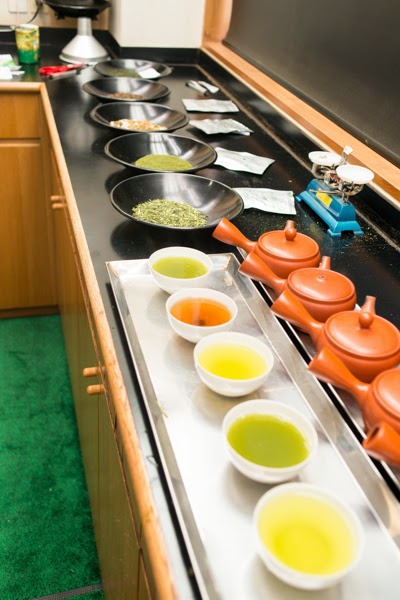
I took a unique green tea in a day when I visited Uogashi tea shop, located near the fish market Tsukiji. It was in the late spring, and I felt the atmosphere of the summer at that time. So their special sparkling green tea, fresh but dense taste, helped me refresh, and since I was so curious, I asked them if I could make it in my home. The answer was "yes" and they kindly told how to do it.

So.... I'd like to show you the way :)


What we need are...
                1tsp of green tea leaves
                500ml of sparkling water
                1 empty tea bag

If you can't find an empty tea bag, you can replace it to a tea strainer.


 1 First, grain the leaves a bit so that it can be extracted well enough in sparkling water. Then, place the leaves to the empty tea bag.
 2 To make some space for the tea bag, remove some amount (50ml or so) of sparkling water from the bottle, and put the leaves with a tea bag in it.
 3 Keep soaking it in a cool place for a day, then pull out.
 4 Take the bottle, and up side down once with care. Slowly and softly, to make sure it's mixed equally.


If you use a strainer instead of a tea bag, you can directly put tea leaves in a bottle of sparkling water, and leave it for a day as well. When you drink it, get some empty bottle, and use a strainer to filter the leaves :)


Now,  enjoy :) 

2/03/2015

Another famous ceramic town "Tokoname" in Aichi :)


 Let's begin with this huge cat :) Tokoname is a famous destination for pottery fan like me. Located by the ocean, this small city has been making a variety of ceramics, especially pots for making green tea for a long time. When you take them at someone's home, you probably notice a chestnut-colored pot with cups. Yes, it is from Tokoname City.


 For the record... I took it in a tea factory I visited last year, 2014:)
(I posted it here by the way ;)


 When you arrive at there, you can see a dozen of brick chimneys stood toward the sky. Although most of them aren't available now, it has us feel like coming a special place. So let's take a tour :)


 Because it was in the middle of New Year Holiday, few workshops were opened. Soo unlucky! I should come back soon (hopefully it becomes warm enough to walk all day :)


 :D

1/09/2015

Visiting Aichi Prefectural Ceramic Museum.


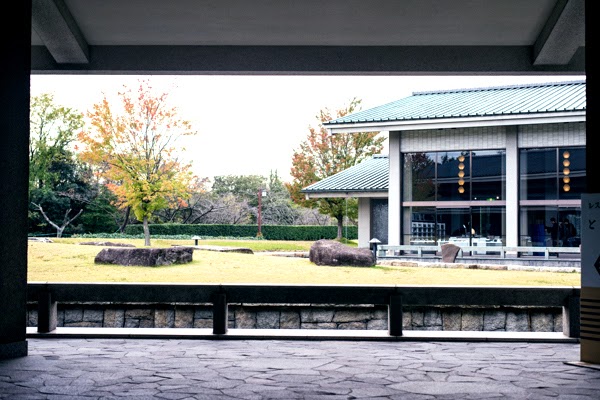
 A couple of months ago, I went to Aichi Prefectural Ceramic Museum, located in Seto, Aichi Prefecture. It’s been quite a long time since I visited last time. Growing up near the museum, my parents sometimes brought me to see and experience how to make ceramics. But, for a child like me, there was no fun being there. Hundreds of resemble ceramic crafts are displayed all the way, and I hardly knew how to enjoy it. Absolutely, I had had no interest in it until I became familiar with Japanese tea. This tea culture includes not only tea itself, but also the way of taking tea, sweets, and cups and other things. Gradually, it reminds me of a famous museum just 30 minutes away from my hometown. So I headed my car toward it in a cold day of November, 2014.

Surprisingly, we can take pictures of most of their collection. In addition, there were few people inside. Several, I remember, no more than 10 people.


So I began to take a close look at one by one, and found easily that “No two things are alike” . Started pots made thousands years ago, there are many pots collected around the globe. No mention that they have famous ceramics around Japan, I particularly found so nice to see pots from a variety parts of the world.


Korean,


Chinese,

and Khmer :)


A half day isn’t enough to see them all. When you feel tired, there is a cool tea room you just pay $5 to enjoy drinking. You can choose your favorite pot displayed in the room to take. They also have quite valuable ones. (Of course you can have a drink with it if you want :)

10/25/2014

How to make Japanese tea "Sencha"?


 While many people in abroad know well about Matcha, some people don't know about other kinds of teas. So let me introduce the most popular and typical tea in Japan: Sencha. It's also a sort of Green Tea, rather easy to buy and take one. A convenience store, for example, we can find a variety of them put in plastic bottles. However, what if we want to make it from tea leaves? Here's how :D

(Note: there are many types of Sencha in Japan, and this is my own way to make it for two people :) 


The boiled water: 450ml (150ml for a time)
Tea leaves: 5g
A pot: Whatever you have :)


Let's begin with discovering a fine tea. In my case, I usually go to a small tea shop near my house, or a basement of department stores. When I choose it from many of them, I always remember one thing from my friend working at a tea company: Find 100g of tea at 1,000yen (Around US$9). It's so well-balanced both price and the quality of tea. If you make a tea everyday, you may finish it within a month. That's what's 100g of green tea like. Of course, you can't save tea leaves for years. Once you open the package, it's better off finish it within a month, or the leaves lost their flavor gradually. Sometimes it takes about two months to drink them all, but it's not recommended. So, 100g is the best to take.


 These are teapots. I assume you don't have it. But don't worry, you can make sencha with other utensils, such as the one for other tea or coffee. The way I make it without my special pot, I do it with my mug and strainer for red tea. I'll show you if you don't have it in this post :D


 The tea pots for green tea usually have a filter to separate leaves from hot water. It means, if you have a pot-like thing and a filter, you can do it anyway ;)


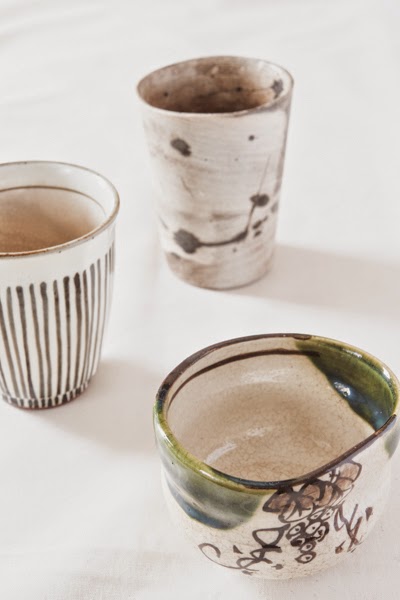
 The way of choosing a cup is my forever journey. Thin or thick, rounded, colored, earthenware or china.... That's something we can't find the answer!


 Well, it's time for tea time :) Just grab your teaspoon and take leaves twice: 2 tsp for one or two cups of tea. I wanted you to measure 4g-5g, and if you happen to have a weighing equipment, then scale with it :)


 Pour 150ml of boiled water to your pot and cups in order to warm them in advance. It helps make tea more tasty and have the water cool down a bit. Ordinarily speaking, boiled water decrease 10 degrees Celcius every time you put it to other pots or cups. For instance, I put it in the pot and two cups. It means the boiled water decreased by 30 degrees to 70 degrees.  For many teas, the ideal temperature of the water is 60-70 degrees. Thus, by cooling it down in advance, you can make the best tea :D When the water looks the best temperature, place the leaves in your pot, and take the  hot water you just prepared, then wait for a minute or two.


 Like red tea and coffee,  pour the tea into the cups bit by bit so that they stay the same density. Once you finish pouring it, it's time to enjoy! ;) 


 So, you can take another hot waters to make tea again up to 3 times. If you want to do it, I recommend to take it with hotter water. Let's say I started with making tea with 60 degrees for my first time. In that case, I would pour 70 degree for the second time, 80 degrees for the third time. This helps leaves make another good teas even for three times. (I frequently do it for 5 times by the way. Well, that still works!)

 For people don't have a pot for Green Tea, I recommend using French Press or Strainer. Since a container and a strainer are the key to making good Green Tea, it doesn't have to be the special one. So let's do it with my French Press Boddum, initially for coffee.


 It works :)  And sure, you also can do it with your own utensil :D


 You might have a question about leftover. I sometimes eat the leaves after making tea. Although it's not so tasty with low quality leaves, good ones taste like seaweed and sweet. I like taking it with flavored vinegar or soy sauce.


 So, this is how to make a good tea in your home. If it makes you imagine the process before doing for your first time, that's my pleasure ;)